
How to Run a Kris Kringle at Work: The Organiser's Kit
Kris Kringle is the Australian name for Secret Santa. Everyone who opts in draws one colleague's name, buys that person one gift to an agreed limit and keeps their identity secret until the reveal. To run one at work you need five things: an opt-in list, a fair draw, a spend limit, a short questionnaire and two dates. This is the kit, ready to forward.
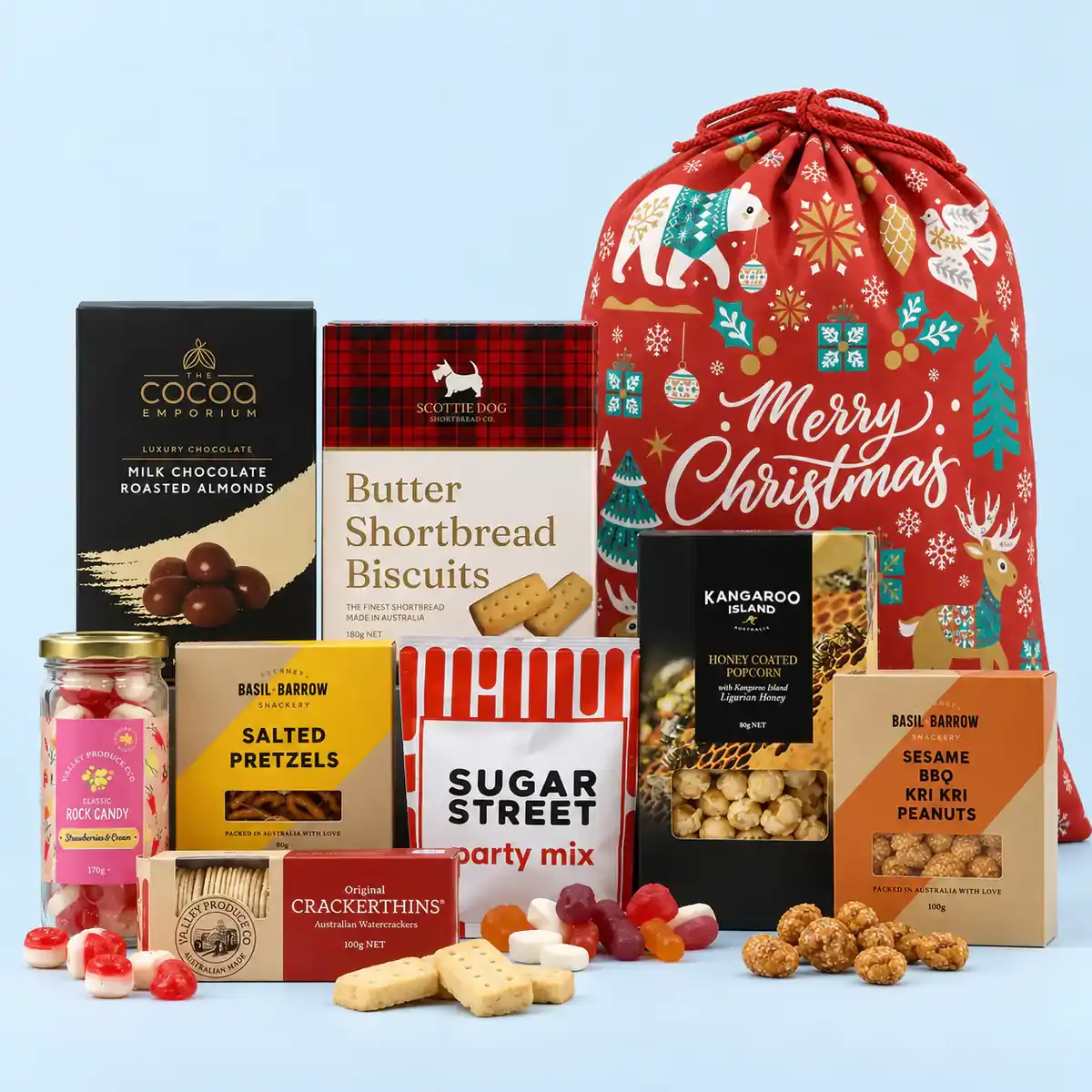
If you are buying a gift as well as running the draw, our Kris Kringle hampers take the guesswork out of the gift itself.
What is Kris Kringle, and why is it also called Secret Santa?
They are the same game. Kris Kringle comes from Christkindl, the German "Christ child" who brought gifts at Christmas, and the name stuck in Australia. Secret Santa is the name most of the English-speaking world uses. Both mean one giver, one receiver, one limit and a secret kept until the reveal. Bad Santa is a different game, where gifts are stolen in turns, and it has its own rules.
Step 1: Make it opt-in
A Kris Kringle works when everyone in it wants to be there. Send an invitation, give people a few days to reply and make saying no easy. Some colleagues do not celebrate Christmas, some are watching every dollar in December, and some simply do not enjoy it. Nobody should have to explain.
Draw the list wide before you close it: part-timers, the colleague on leave, the contractor who is at every meeting and the people in the other office. Being left off the email stings far longer than the game lasts.
A short invitation does the job: "We're running a Kris Kringle this year. The limit is $30, names are drawn on [date] and gifts are swapped at [event]. Reply by [date] if you'd like to be in it."
Close the list on a fixed day and announce the final number of players, so nobody joins after the draw and leaves the organiser redrawing names at 4pm on a Friday.
Step 2: Run the draw fairly
There are three common ways to draw names, and each suits a different office.
- Names in a hat. Quick and fun when everyone is in one room. Redraw if anyone pulls their own name.
- By email, through one neutral person. Someone who is not playing draws the names and emails each giver privately. Best for teams across sites.
- A free online draw tool. Everyone enters a name and email and the tool sends each person their match. Handy for big groups, and most can keep partners or desk neighbours apart.
Whichever you use, leave one sealed master list with a person who is not playing. When someone is off sick on swap day or leaves before Christmas, the organiser can sort it quietly without breaking the secret.
Step 3: Set the spend limit
Agree one limit, put it in writing and hold everyone to it. Going well over makes one gift look showy, and going well under makes one look like an afterthought. Three limits cover almost every office.
- $20: a small, useful treat, like good coffee, a box of tea or a block of good chocolate.
- $30: room for something that feels like a proper present, and still easy on everyone's December.
- $50: enough for a ready-made gift box or small hamper that looks generous on the desk.
Agree what the limit covers: the gift alone, or the gift plus wrapping. Most offices keep it simple and count only the gift. Say whether delivery counts toward the limit. Our hampers under $100 carry a flat $14.95 standard delivery, and our gifts under $50 and $30 to $60 hampers make a $50 limit easy to shop.
Kris Kringle themes that change it up
A theme makes shopping easier and the swap more fun, because everyone is solving the same puzzle. Pick one and put it in the invitation with the limit.
- Something edible. The easiest theme of all, and the one that gets the fewest regifts.
- Made in Australia. Local food, drink or makers only, which turns the swap into a show-and-tell.
- Your Christmas Day in a box. Whatever you would want on the table on the day, from shortbread to a good cheese knife.
- Pay it forward. Everyone spends the limit on a gift for a local charity instead, and the office delivers the lot together.
Step 4: Send the Secret Santa questionnaire
A short questionnaire turns a guess into a gift. Send it to everyone who opts in, have the organiser hold the answers privately, and pass each one only to the person who drew that name. Copy and paste this:
- Your name and team.
- Three things you enjoy outside work.
- Coffee, tea or neither?
- Sweet, savoury or both?
- Any allergies or dietary needs your Santa should know about?
- Alcohol: yes, no, or prefer not to receive it?
- Anything you would rather not receive?
- Where should your gift go: the office, or your home address (shared only with the organiser)?
Question six matters more than it looks. Plenty of people do not drink, and a bottle of wine opened in front of the whole office is an awkward thing to hand back.
Step 5: Write the gift rules down
Put four rules in the same email as the limit, so nobody can say they missed them.
- Keep it kind. No gift that mocks the receiver, and nothing about their age, body, looks, politics or religion.
- Keep it general. No clothing, perfume or anything personal. If you would not open it in front of your manager, do not give it.
- Respect the questionnaire. Alcohol only if they said yes, and nothing that clashes with an allergy or dietary need.
- Stay inside the limit. One gift, one price, for everyone.
A gift everyone can share passes all four, which is why food wins so often at work. It gets used, enjoyed and finished by New Year, and nobody has to find room for it on a shelf.
Kris Kringle for remote and hybrid teams
A spread-out team can play the same game. Collect home addresses through the questionnaire, keep them with the organiser and give each giver only the one address they need. Each gift goes straight to its receiver's door, and the reveal happens on a video call where everyone opens their parcel together.
A hamper suits this better than almost anything, because it travels well and arrives ready to give. We send Australia-wide, and the free gift card can be signed "Your Secret Santa" so the secret survives the delivery. If the business is buying a gift for every team member instead of running a draw, see our Christmas gifts for staff: send us the list and each hamper goes to its own door from one order. More on looking after people you rarely see in person is in gifts for a remote or hybrid team.
Timing: a Kris Kringle calendar
- Four weeks out: send the invitation and the limit.
- Three weeks out: close the list, send the questionnaire and run the draw.
- Two weeks out: everyone buys or orders. Anything being posted should be ordered now.
- The week of the swap: a reminder with the date, the time and the limit.
- Swap day: the reveal.
If gifts are being delivered, count back from swap day using our Christmas delivery dates. Order before 1pm Melbourne time on a weekday, public holidays excepted, and we hand-pack your hamper in Victoria and dispatch it the same day.
The reveal
Pick a style before the day. A straight reveal has each giver hand over their gift and own up. A guessing round has each person open their gift and guess their Santa first, which is a good icebreaker for a big team. Some offices stay secret for good, which suits a shy team. If your crowd likes a bit of chaos, swap the draw for a gift-stealing round and follow our Bad Santa rules.
Should managers play?
Yes, if they want to, on exactly the same terms as everyone else: same limit, same draw, same secret. A manager who draws a junior colleague should resist the urge to spend more, and a junior who draws the CEO should not panic, because the limit is the whole point. If the business wants to thank everyone as well, keep that separate from the draw, so the Kris Kringle stays a game between equals.
When something goes wrong
Every office Kris Kringle hits a snag or two. Decide the fixes now and nobody has to improvise in front of the team.
- Someone drops out after the draw. The colleague they drew still needs a gift. The organiser checks the sealed list and quietly covers it, or asks whoever drew the dropout to give to that colleague instead.
- Someone forgets their gift. Keep one spare gift to the limit with the organiser, so nobody goes home empty-handed.
- A gift blows the limit. Say nothing on the day and repeat the limit, kindly, in next year's invitation.
- A gift clashes with a dietary need. Swap it from the spare, and treat it as a reason to send the questionnaire earlier next year.
- Someone guesses their Santa early. Laugh it off and carry on. The secret is part of the fun, not the point.
Sorting your own gift
The organiser's gift is usually the one bought last. Our Kris Kringle hampers start under $50 and arrive ready to hand over, with a free personalised gift card. For ideas by budget and by coworker, read Kris Kringle and Secret Santa gift ideas.
Frequently asked questions
How does Kris Kringle work?
Everyone who wants to play puts their name in, and each person draws one name at random. You buy that person one gift to the agreed limit and keep your identity secret until the reveal. The organiser sets the limit, the draw date and the swap date, and sends a short questionnaire so each giver knows what their person enjoys.
What is the difference between Kris Kringle and Secret Santa?
There is no difference in how you play. Kris Kringle is the name most Australians use, taken from the German Christkindl, while Secret Santa is the name used across much of the world. Both mean one giver and one receiver, an agreed limit and a secret kept until the swap. Bad Santa, where gifts are stolen in turns, is the different game.
How much should you spend on Kris Kringle at work?
Most workplaces set a limit of $20, $30 or $50, and the right one is the one nobody in the team will struggle with. Agree it before the draw, put it in writing and say whether postage counts. Everyone should spend close to the limit, because a gift far above or below it stands out for the wrong reasons.
What questions should be on a Secret Santa questionnaire?
Keep it to about eight questions: name and team, three things they enjoy, coffee or tea, sweet or savoury, allergies and dietary needs, whether they would like alcohol, anything they would rather not receive, and where the gift should go. The organiser holds the answers and passes each one only to the person who drew that name.
How do you do Secret Santa with a remote team?
Run the draw by email or with an online tool, collect home addresses privately through the questionnaire and give each giver only the address they need. Each gift is sent straight to its receiver, then everyone opens their parcel together on a video call. Sign the gift card "Your Secret Santa" so the delivery does not give the game away.