
How to Choose a Gift Hamper
Choosing a gift hamper comes down to four questions: who it is for, what the occasion is asking of the gift, what you want to spend, and how far it has to travel. Answer them in that order and the shortlist gets short quickly. This guide works through each one, and through the one case where a hamper is the wrong call.
We have been sending gift hampers for over two decades, Australian owned and run the whole way, with over 2 million hampers shipped. What follows is the same thinking we use on the phone when someone rings and says they have no idea where to start.
Start with the person, not the range
Most people begin by browsing. It is faster to begin by writing down three things you know about the recipient: what they drink, what they would never eat, and whether they are likely to share it.
Those three facts do most of the work. Someone who does not drink needs a gift built around coffee, tea, chocolate or something savoury, not a bottle with a token snack beside it. Someone who is coeliac needs the whole gift to be safe, not most of it. Someone who lives alone will get more out of a smaller, better gift than a large one they cannot get through.
Where people go wrong is treating a dietary requirement as a detail to work around rather than the first constraint. If someone cannot eat gluten, a gift that is mostly gluten-free with two things they have to hand to somebody else is not a kindness, it is a small humiliation delivered in a box. The same applies to nuts, to dairy, and to anyone who has told you once that they do not drink. Take the constraint as the brief and the gift gets easier, not harder, because it narrows the field for you.
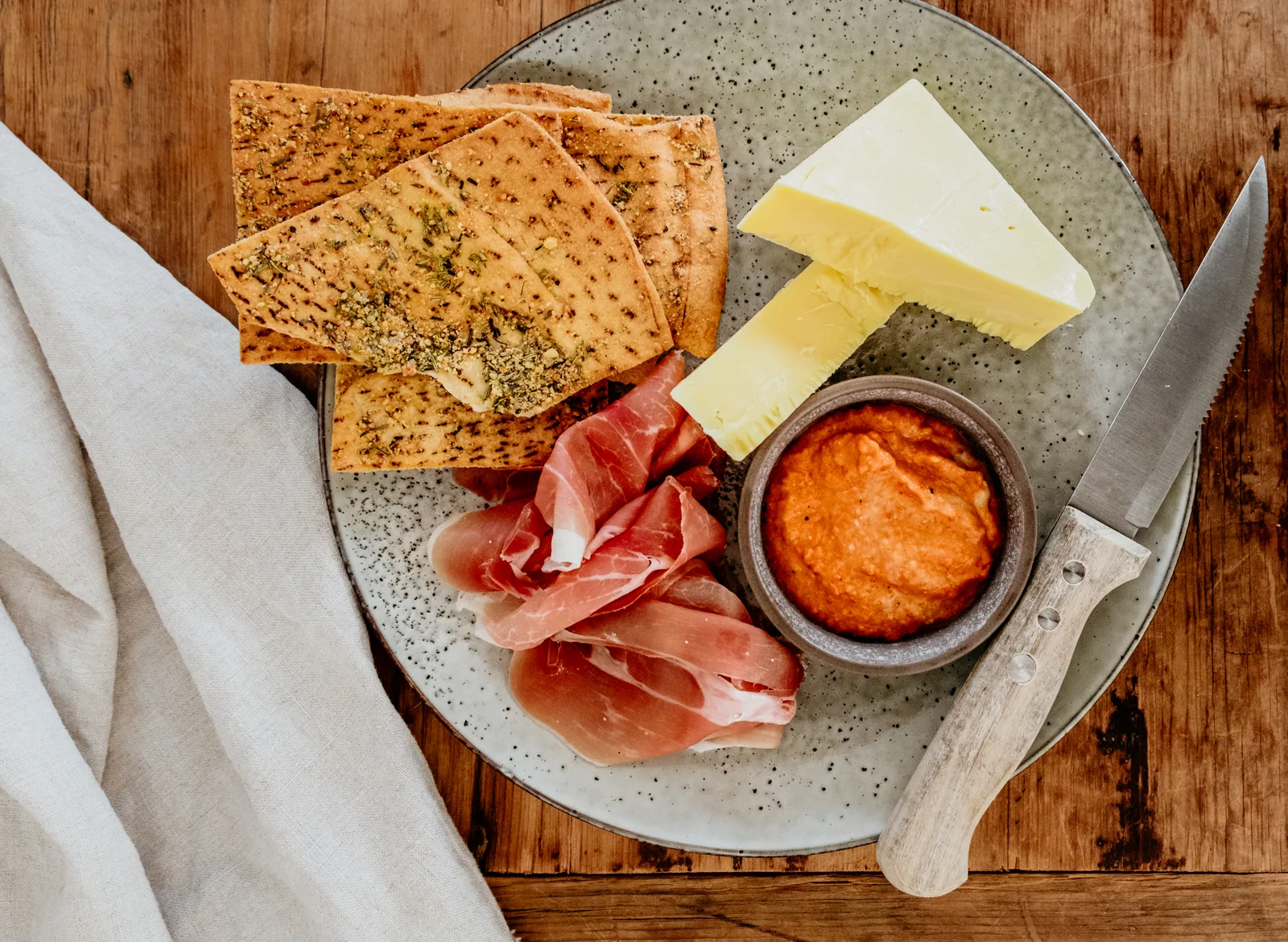
If you genuinely know nothing about them, do not guess at a favourite. Choose broad, well-made food and let the presentation carry the gesture. Something savoury, something sweet and something to drink is a combination almost nobody dislikes, which is why a cheeseboard hamper is one of the gifts we send most when the brief is thin.
Let the occasion set the size and the tone
The person tells you what goes in it. The occasion tells you how big it should be and how it should feel. A thank you for a favour and a gift for a colleague in hospital are not the same gesture, even where the food inside them overlaps.
| The moment | What the gift is being asked to do |
|---|---|
| A thank you | Stay in proportion. Match the favour, not the strength of your gratitude. |
| Illness or recovery | Be gentle. Small, easy food and a short message. |
| Loss | Show restraint. Quiet packaging, nothing that reads as a celebration. |
| A new home | Give them something to open that night, and something to keep. |
| A milestone at work | Be shareable, so the people around them are included. |
| A birthday or an anniversary | Feel personal. This is the one time a specific favourite beats a safe choice. |
Tone is easier to get wrong than contents. A large, loud gift sent to someone having a hard month can land as noise. A small, quiet one sent to mark twenty years at a company can land as an afterthought. Size is a message, so send the size you mean.
The other thing the occasion decides is who else is in the room. A gift opened privately can be personal. A gift opened at a desk, at a table, or in front of a ward is being read by other people, and it should be something the recipient is comfortable having read. That single question, will anyone else see this, resolves more gifting dilemmas than any amount of browsing.
Deciding what to spend
There is no correct figure, but there is a useful test: the gift should read as considered rather than expensive. Most gifting sits in a comfortable middle band that is generous without putting the recipient under any obligation. Below it, a smaller gift chosen well beats a bigger one padded out. Above it, the luxury range is for the moments that genuinely warrant it: a wedding, a retirement, a client who carried you through a difficult year.
Two habits save money. Do not pay for volume you do not need, because a recipient who lives alone will remember the two things they loved and forget the six they did not. And set the budget before you browse rather than after, which is the difference between choosing a gift and talking yourself into one. Our mid-range gift hampers are the easiest place to see what a given budget actually buys, and we have written the longer version in how much a gift hamper should cost.
The fourth question: how far it has to travel
This is the one people forget until it is a problem. A gift going across a city and a gift going to a remote address are not the same order, and the difference shows up in three ways: how long it is in transit, what happens to it on the way, and where it can actually be delivered.
Time first. Transit runs on top of dispatch, so the further it is going the earlier you need to order, and regional and remote addresses need more room than capital cities. Same-day dispatch is available on weekday orders placed before 1pm AEST or AEDT, excluding public holidays, and there is a standard and an express option at checkout. Standard delivery is free on hampers priced $100 or more, and a flat $14.95 per hamper under that, with no handling markups.
Then the journey itself. An Australian summer is unkind to anything that melts, so a long trip in February is an argument for savoury over chocolate. And finally the address. A hospital ward, a workplace reception, a building site and a share house all have their own constraints about who signs and where it sits until someone collects it. If in doubt, send it to a home address and let the recipient carry it where they want it.
Presentation is most of the gift
This is the part people underestimate. The recipient meets the box before they meet the food, and the thirty seconds of opening it is the part they will describe to someone else. Packaging that holds its shape in transit, contents that have not shifted, a ribbon that was tied rather than stapled, and a card with something written on it: that is the difference between a delivery and a gift. Every order includes a free personalised gift card, and it is worth using properly rather than signing your name.
The words around all this are looser than they look. Hamper, gift box and gift basket are used more or less interchangeably in Australia, and the container is mostly a style decision. We have pulled that apart in what the three words actually mean. If you want to go further into what belongs inside one, what to put in a gift hamper covers composition, and building your own or buying ready-made covers whether to assemble it yourself.
Presentation is also the hardest part to fake and the easiest to notice. The same food in a supermarket bag would not read as a gift at all. The experience of opening it is not the wrapping around the gift, it is a large part of the gift.
One thing worth mentioning because people ask: for every hamper we send, one meal is donated.
When a hamper is the wrong answer
Three situations. The first is a hospital ward with no space and strict rules about what can come in, where a small, soft, non-perishable gift is kinder than a large one. The second is someone mid-move who has nowhere to put anything, where the answer is to send it a fortnight later once the kitchen exists. The third is a dietary requirement you cannot verify, where the honest move is to ask rather than to hope.
There is also the case where a hamper is right but the format is not. If the recipient will keep the container and use it, a woven gift basket earns its place. If it is going into a small flat, a box is the more thoughtful shape.
And there is the case where the gift is right but the timing is not. If something has just happened, whether that is a birth, a death or a move, the house is already full of people and parcels. A gift sent two or three weeks later arrives when the noise has stopped, which is usually when it is most welcome.
Where to start
Work down the four questions, take the answer they give you, and stop second-guessing it. Our full range of gift hampers is sorted by occasion and by budget so the shortlist does the narrowing for you. Same-day dispatch is available on weekday orders placed before 1pm AEST or AEDT, excluding public holidays, everything is hand-packed in Australia and sent Australia-wide, and once the order is in you can leave the rest to us.
Frequently asked questions
How do I choose a hamper for someone I do not know well?
Work outward from the occasion rather than inward from the person. When you do not know their tastes, broad categories are safer than specific ones: something savoury, something sweet, something to drink. Keep it away from anything personal, such as scent or skincare, and let the presentation do the work the personal touch would normally do. A written message on the gift card matters more here than the contents, because it is the only part of the gift that is unmistakably from you.
Is a hamper a lazy gift?
It is a lazy gift when the sender has not chosen anything, and a considered one when the choice matches the person and the moment. The difference is visible from the outside. A hamper picked because it suits someone who cooks, or someone who has just moved, or someone who cannot eat gluten, reads as attention. One picked because it was the first result reads as a transaction. The format is not the problem; the thinking behind it is.
Should I choose by occasion or by what they like?
By what they like, with the occasion setting the size and the tone. Their tastes decide the contents, because that is the part they experience. The occasion decides how big it should be and how it should feel, because that is the part that signals what you meant by it. When the two pull in different directions, follow the person and adjust the scale.
How far ahead should I order a hamper?
Order as early as you comfortably can, particularly for a dated occasion, so you are choosing rather than salvaging. Same-day dispatch is available on weekday orders placed before 1pm AEST or AEDT, excluding public holidays. Transit time on top of that depends on where it is going, so allow more for regional and remote addresses, and more again in December.